
The short answer
A headlamp is approved together with a specific light-source category. Halogen categories such as H1, H4, H7 and H11 are defined by UN Regulation No. 37, and a lamp designed for an H7 bulb produces the correct beam only with a light source that matches that category’s geometry. LED replacement bulbs can be fitted legally only where they carry an approval for that use and where national rules allow it.
How the categories work
The category is printed on the base of the bulb and in the vehicle handbook. Each category fixes the position of the filament, the base and the electrical characteristics, so that the reflector or lens places the light where the regulation requires. Categories are not interchangeable: an H7 lamp takes an H7 light source.
| Category | Filaments | Typical position |
|---|---|---|
| H1 | 1 | Main or dipped beam with a separate reflector |
| H4 | 2 | Dipped and main beam in one bulb |
| H7 | 1 | Dipped or main beam, very common on European cars |
| H11 | 1 | Dipped beam and fog lamps |
| HB3 / HB4 | 1 | Main beam (HB3) and dipped beam (HB4) |
What the regulations say about LED replacements
Regulation No. 37 was amended in 2022 to introduce LED replacement light sources, marked “LEDr”, which are approved to reproduce the light distribution of the filament category they replace. LED light sources for lamps designed around LEDs from the start fall under a separate regulation (UN Regulation No. 128). Whether a given LED replacement may be used on the road in your country depends on the approval marking on the bulb and on national legislation; a bulb without an approval marking is not road-legal in exterior lamps in most jurisdictions.
Five things to check before fitting an LED bulb
- Approval marking. Look for an approval mark on the bulb and documentation stating which halogen category and which lamp types it is approved for.
- Beam pattern. After fitting, check the cut-off line on a wall or with a beam setter. Glare for oncoming traffic is the most common failure.
- Physical fit. LED bulbs carry a heat sink or fan; confirm there is room behind the headlamp and that the dust cap still closes.
- Electrical behaviour. Some vehicles report a bulb fault or flicker with LED loads; check whether the bulb is designed for your vehicle’s lamp monitoring.
- Colour temperature. Very blue light reduces contrast in rain and fog. A colour temperature close to daylight is easier on the eyes.
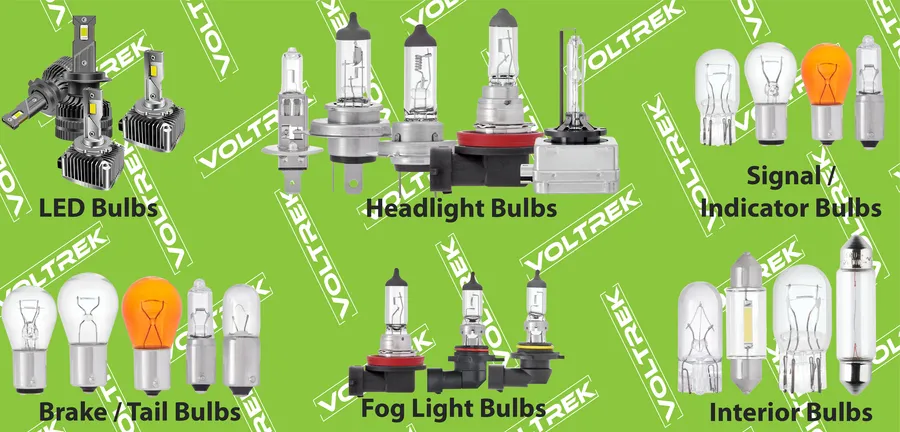
VOLTREK supplies both halogen headlight bulbs in the main categories and LED bulbs. Trade customers can request the recommended option for a given lamp and category by email.