
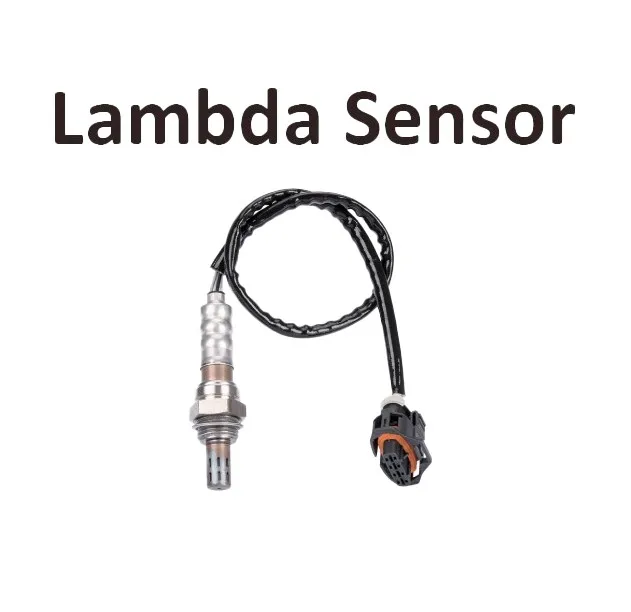
What the lambda sensor does
The lambda sensor measures how much oxygen is left in the exhaust gas. The engine control unit uses that reading to keep the air-fuel mixture close to the ideal ratio, so the catalytic converter works efficiently and fuel consumption stays low.
Most vehicles have two sensors per exhaust line: one upstream of the catalytic converter, which controls the mixture, and one downstream, which monitors how well the converter is working.
Symptoms of a failing sensor
A worn lambda sensor rarely fails all at once. It usually becomes slow and its readings drift. The typical signs are:
| Symptom | Why it happens |
|---|---|
| Higher fuel consumption | A slow or drifting sensor pushes the control unit into a richer mixture |
| Engine warning light | The on-board diagnostics detect a signal that is out of range or too slow |
| Failed emissions test | Rich mixture and a poorly regulated catalyst raise tailpipe emissions |
| Rough idle or hesitation | Mixture corrections lag behind actual conditions |
Ignoring the problem can damage the catalytic converter, because an over-rich mixture overheats it. A catalytic converter costs far more than a sensor.
What to check before replacing it
- Read the fault codes with a diagnostic tool. The code tells you which sensor is reporting (upstream or downstream, which bank) and whether the fault is the sensor itself, its heater circuit or its wiring.
- Inspect the wiring and connector for chafing, oil or heat damage. A broken heater circuit produces the same warning as a dead sensor.
- Rule out other causes of a mixture fault: an air leak after the air flow sensor, a faulty air flow sensor or a misfiring ignition coil can all produce lambda-related codes without the lambda sensor being at fault.
- Note the OE reference number printed on the existing sensor. Upstream and downstream sensors are often different parts even when they look alike.
Choosing the replacement
Match the replacement to the OE number of the sensor you are removing, not just to the vehicle model. Cable length, connector and the sensor’s heater specification must all correspond. Trade customers can request the matching VOLTREK code and cross-references by email.